the Salt: notes on a beginning
· Updated
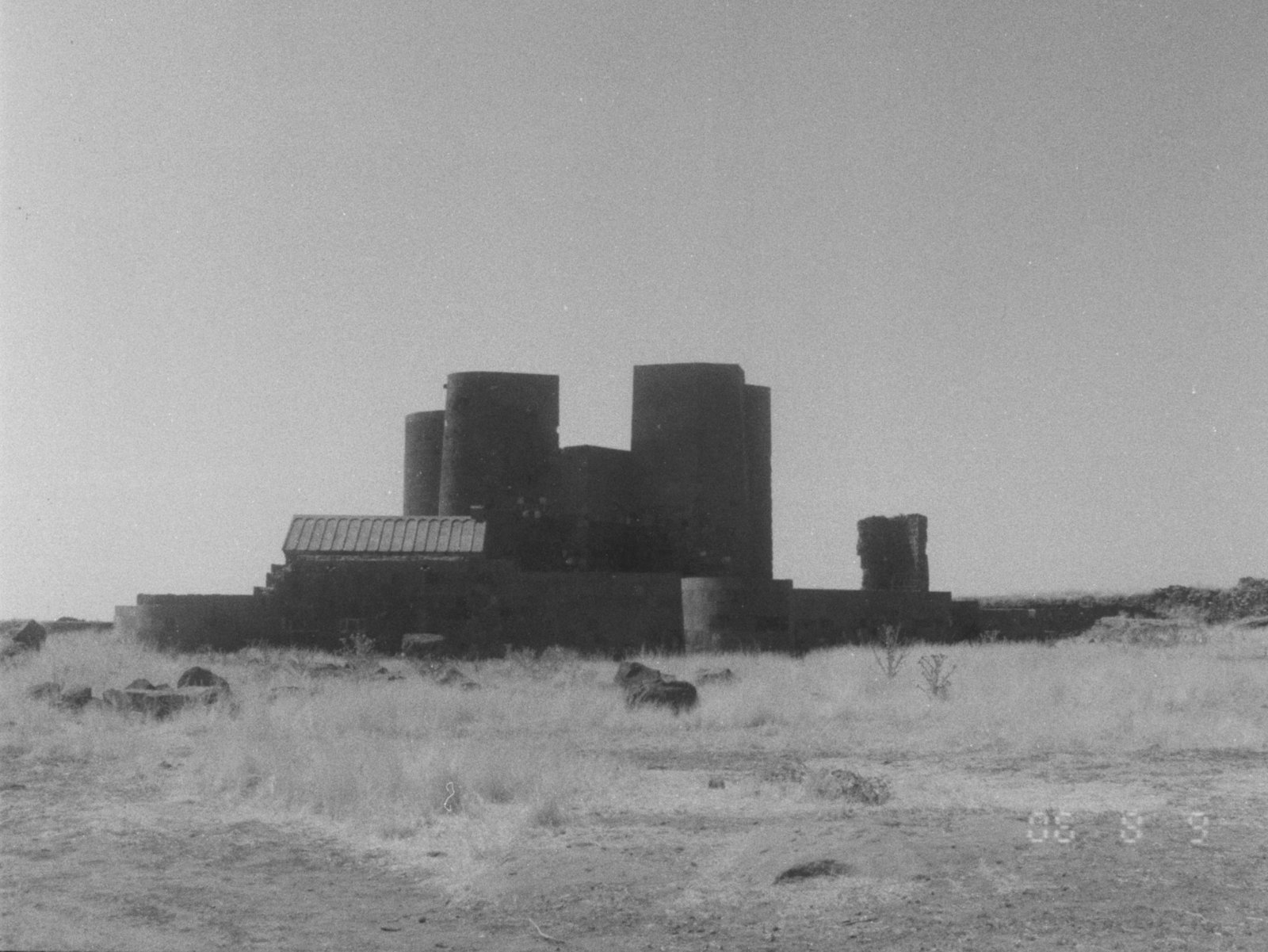
Some places are where we live. Others live on in us.
Sometimes they are one and the same. Sometimes a border, a war, a decision, or a turn in history pulls them apart. We leave, yet the place comes with us: in the language that rises first to our lips, in a familiar taste found far from home, in a poem we have carried for years, in the tales we keep telling and the silences passed down to us.
the Salt began somewhere in that distance. Based in the Caucasus and rooted in Armenia, we are an independent cultural platform looking towards Iran, the surrounding region, and beyond. Through writing, images, and conversation, we follow the ways culture travels: how a place becomes memory, how memory finds another language, and how creative life continues when people cross borders or begin again elsewhere.
That is one way to describe the Salt. But its real beginning is more personal: it lies in why we came here, what we brought with us, and the need to create a place where those stories could meet.
What we carry when we leave
the Salt began with people who came here from elsewhere.
I moved to Armenia from Iran when war, political pressure, and the risks tied to personal and creative expression made life feel increasingly uncertain. It was a form of self-exile, if exile undertaken before staying becomes impossible can ever be described entirely as a choice.
My partner came from Latvia. Surrounding us were people from Russia, Ukraine, and various other places, each with their own reason for being here. Some had escaped war. Some had left political conditions they could no longer accept. Some were searching for work, freedom, or the possibility of imagining a future. Others had followed relationships, opportunities, or instincts they could not yet explain.
We had not come for the same reasons, and we had not left the same things behind. Yet we recognised something in one another: what it means to live between the place that formed you and the place where your life is now taking shape.
Exile has many forms. It may be imposed suddenly, through violence, persecution, or war. It may happen gradually, as the space for one’s work, voice, or way of living becomes narrower. It may be economic, political, artistic, or personal. One can even experience exile without leaving: the estrangement of no longer recognising a country, a language, or a future once imagined as one’s own.
Departure can bring safety, freedom, and possibility. It can also create an internal division. Part of life moves forward while another part remains in conversation with what was left behind.
the Salt grew from that conversation.
Why Armenia
Armenia is a country in which different times remain visible at once. Ancient stone, Soviet architecture, and contemporary urban life occupy the same streets. Family histories cross generations and borders. Absence is present in daily life: not only through what has been lost, but through the many people who have left, returned, or learned to belong elsewhere.
Culture here does not live solely within institutions. It lives around tables and in courtyards, studios, markets, workshops, and apartments.
Armenia sits in a region where many cultures have met for centuries, despite political efforts to keep them apart. Iran, Armenia, Georgia, and Azerbaijan are distinct places with their own histories, languages, and internal complexities. Their relationships cannot be made innocent. Their histories have been formed by coexistence, but also by conflict, forced displacement, closed borders and memories that remain painfully unresolved.
the Salt does not intend to soften these differences into an attractive regional story. Nor do we want to speak for a geography from above.
We are interested in something smaller and, perhaps, more difficult: how people speak from within their own lives. What becomes visible when individual experiences are allowed to exist beside one another without being made to represent entire nations? What do neighbours remember about one another when borders insist upon distance?
We begin in Armenia because this is where we are. But beginning here does not mean ending here.
From here, elsewhere
“From here, elsewhere” describes the direction of our attention.
Here is never an abstract point on a map. It is the ground beneath us: particular, material, and imperfect. It contains political realities, weather, architecture, food, language, contradictions, and daily life. To begin from here is to look carefully before attempting to interpret. It is to understand that cultural work does not appear from nowhere; it emerges from specific lives and conditions.
Elsewhere is everything that enters the present from beyond it. It may be a former home, an inherited memory, or a language spoken within another language. It may be the country to which someone cannot return, or one they have never visited but still recognise as part of themselves. It may be a story travelling between people, an image finding a different audience, or a conversation beginning between two lives that would not ordinarily meet.
The movement between here and elsewhere changes both. A person arriving in a new country does not enter as an empty vessel. They bring memories, habits, knowledge, prejudices, grief, and ways of seeing. The place that receives them is not passive either. It resists, welcomes, unsettles, and transforms. Belonging develops through this encounter: not as the erasure of what came before, but as a more complicated relationship between continuity and change.
This is the territory the Salt wants to inhabit.
Why Salt?
Salt is ordinary and essential. It belongs to the kitchen and the road, the body and the earth. It preserves, alters, and reveals. A small amount can change the character of everything around it.
Salt has been traded, carried, shared, and fought over. It passes through borders while retaining the trace of where it came from. It can protect something from disappearance, but preservation is never neutral: what is kept is also changed. We were drawn to this tension.
Culture, too, survives through transformation. A story entering another language does not remain exactly as it was. A tradition carried into a new country encounters different materials and conditions. Memory shifts a little every time it’s remembered. Continuity is not the opposite of change; it is often made possible by it.
the Salt is curious about these altered continuities: what people choose to preserve, what they reinvent, and what happens when inherited traditions encounter unfamiliar settings.
Culture as everyday life
We do not understand culture as something separate from ordinary existence. It lives in art and literature, but it also lives in domestic rituals, local expressions, clothing, food, tattoos, photographs, and buildings. It is present in what people make deliberately and in what they carry without realising it.
Some of the most revealing cultural histories are held outside official archives. They survive in personal collections, family stories, gestures learned by observation, and objects whose meaning is known only to those who kept them. They may disappear silently: not because they lacked value, but because no one stopped long enough to ask about them.
Attention is therefore central to the Salt.
For us, to pay attention means staying with something until its complexity reveals itself. It means resisting the speed with which people, places, and experiences are categorised, and allowing contradictions to remain without immediately trying to resolve them.
We want to approach cultural life through this slower form of attention: journalistic in its curiosity, literary in its openness to ambiguity, and personal in its understanding that no observer stands entirely outside what they observe.
A place for unfinished things
the Salt begins with writing, images, and conversation because each reveals something the others cannot.
Writing can follow the interior movement of memory. An image can preserve an atmosphere for which language is insufficient. Conversation allows thought to remain unfinished: to change through the presence of another person.
We are interested in essays, encounters, observations, narratives, and voices that move between the personal and the political without reducing one to the other. We want to look at how people create under pressure, how language changes through migration, how places remember, and how private lives carry the consequences of public history.
This does not mean that everything appearing here will be about exile, conflict, or loss.
Displacement is part of our beginning, but it is not the limit of our attention. Culture also persists through pleasure, humour, desire, friendship, beauty, craft, and acts of invention. People are more than the conditions that forced them to move. Places are more than the conflicts through which outsiders know them.
the Salt wants to be attentive to the whole field of cultural life: what wounds, what survives, what delights, and what has not yet found its form.
We do not know every shape the platform will eventually take. That uncertainty is deliberate. We would rather allow its forms to emerge through real encounters than announce a complete world before it exists.
Some conversations may become essays. Some observations may become visual stories. Some meetings may lead to working together, gatherings, or work we cannot yet anticipate. Other encounters may remain private and still alter the direction of what follows.
the Salt is not intended to speak over these exchanges. It is meant to make room for them.
Beginning from where we are
For us, independence does not mean isolation. It means remaining curious, protecting complexity and allowing work to develop outside the demand for immediate usefulness or easy explanation. Hospitality is part of the same practice: making room for another person’s experience without requiring it to resemble our own. We value the time and accumulated knowledge held within craft, and the willingness to return: to people, places, and questions, rather than treating culture as an endless sequence of discoveries. And place is where all of this begins.
the Salt begins in the Caucasus, with Armenia beneath our feet and Iran close in memory and geography. It begins among histories that overlap without becoming identical, and among people whose lives are connected by routes more complicated than national borders suggest.
From here, we look elsewhere. From elsewhere, we learn to see here differently. the Salt will grow through what is brought to it and through what it learns to notice.
From here, elsewhere.